3 Options for Partial Dentures
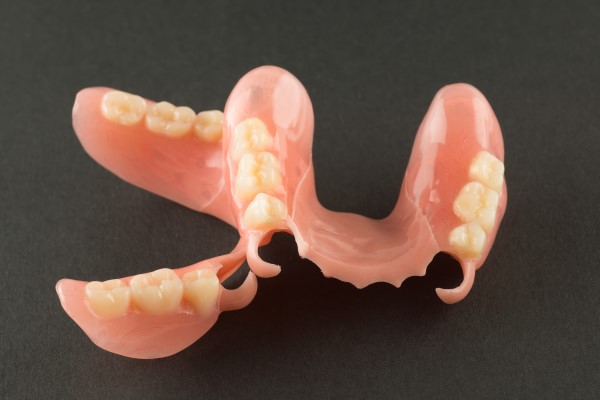
There are many options that you can consider when looking at partial dentures. They can come in several different materials and varieties. Let us take a look at each one, taking both the pros and the cons into account.
Acrylic
Acrylic dentures are probably the most commonly used variety. There are several benefits to them. First, they can be matched to the color of the patient's gums. They are also modifiable, and more teeth can be added to the same denture if more teeth are lost in the future. They are also often the most affordable option. Therefore, they are often the best option for people looking for temporary dentures, such as flippers, which are temporary dentures with only one or two teeth attached.
However, there are also drawbacks to choosing acrylic partial dentures. Since they are the cheapest option, they tend not to last as long as the other types. Patients may need to fix or replace them, which can generate hidden out-of-pocket costs along the way. They may also put a strain on the mouth, leading to discomfort and irritation.
Metal
Partial dentures can be metal, as well. Metal dentures are lighter and sturdier than acrylic ones, so patients do not have to worry about them breaking as much. Even if the patient accidentally drops them, they probably will not break. They use less material in the patient's mouth, as well, which can be more comfortable and leads to less food getting trapped in them. Like acrylic dentures, they can be modified so that more teeth can be added as needed.
As with all varieties, there are several downsides to metal dentures. The biggest downside might be the cost, as metal dentures are the most expensive type. The metal can also be very noticeable in the patient's mouth. Therefore, if someone is looking for subtlety and it is not immediately apparent that they are wearing dentures, metal ones might not be the choice for them.
Flexible
Another option is flexible partial dentures. These are made from a special kind of plastic that’s molded at high temperatures called thermoplastic. Acrylic and metal dentures tend to work with adhesives and clasps. However, flexible dentures do not need either of those due to how they are molded. Flexible dentures last longer than either acrylic or metal dentures.
As the name implies, they are thinner and more flexible than the other types, and they fit better in the patient's mouth. The better fit means that they will irritate the mouth less, and they are much less likely to cause sores or even lesions. The base is clear, so they do not need to be color-matched to the patient's gums. They are more expensive than acrylic dentures but less expensive than metal ones.
Their main con is that they are generally unfixable. If they break, patients will need to buy entirely new ones. They also are not as easy to modify as the other types, so if the patient ends up losing more teeth, they will likely have to buy new ones.
Call our office to learn more
Cottonwood Dental offers partial dentures in the Irving area. Are you ready to restore your smile? Call our office to learn more about our services or to schedule an appointment.
Request an appointment here: https://www.cwdentalgroup.com or call Cottonwood Dental at (972) 536-6535 for an appointment in our Irving office.
Check out what others are saying about our dental services on Yelp: Partial Dentures in Irving, TX.
Related Posts
When you experience a chipped tooth, consulting a cosmetic dentist is the most effective way to restore your smile to its full health and beauty. Professional treatment prevents the damage from worsening while also addressing the cosmetic concerns that impact your daily confidence. These treatments blend seamlessly with the natural enamel to create a functional…
A dental crown can restore a damaged tooth, but the placement process may differ for front and back teeth. A general dentist considers the tooth’s location, the amount of pressure it can withstand, and its visibility when planning treatment. While both types of crowns cover and support a tooth, each one serves a slightly different…
Dental veneers can refresh a smile by covering chips, stains, or uneven edges. After placement, daily habits help dental veneers stay comfortable and look natural. A general dentist can guide home care and follow-up visits so patients know what to do and what to avoid. New dental veneers often feel smooth and slightly different along…
A strong relationship with a family dentist gives households a trusted partner in oral health. With regular visits, clear guidance, and practical tips, families learn how to protect their smiles through each stage of life. For instance, daily brushing and flossing, thoughtful food choices, and consistent professional care work together to reduce the risk of…